
You move a stack of boxes in the garage and a dark, flat spider scrambles out from a messy patch of webbing. It’s bigger than you’d like and the legs look thick. Your first thought is brown recluse. Most of the time in South Carolina, it isn’t.
What you’re probably looking at is Kukulcania hibernalis, the southern house spider, and it’s one of the most common spiders we get called about across the Upstate.
What Is Kukulcania Hibernalis?
Kukulcania hibernalis sounds far more exotic than it looks. It’s the scientific name for the southern house spider, a species right at home in the warm, humid stretches of the Southeast. The females are the ones people notice. They run dark brown to charcoal and stretch an inch or more across with the legs spread.
They’re also the ones building those tangled webs in wall cracks and the corners of a garage or shed. Males look so different that people take them for a separate spider entirely. They’re lighter and leggier, out in the open looking for mates.
How to Spot a Southern House Spider
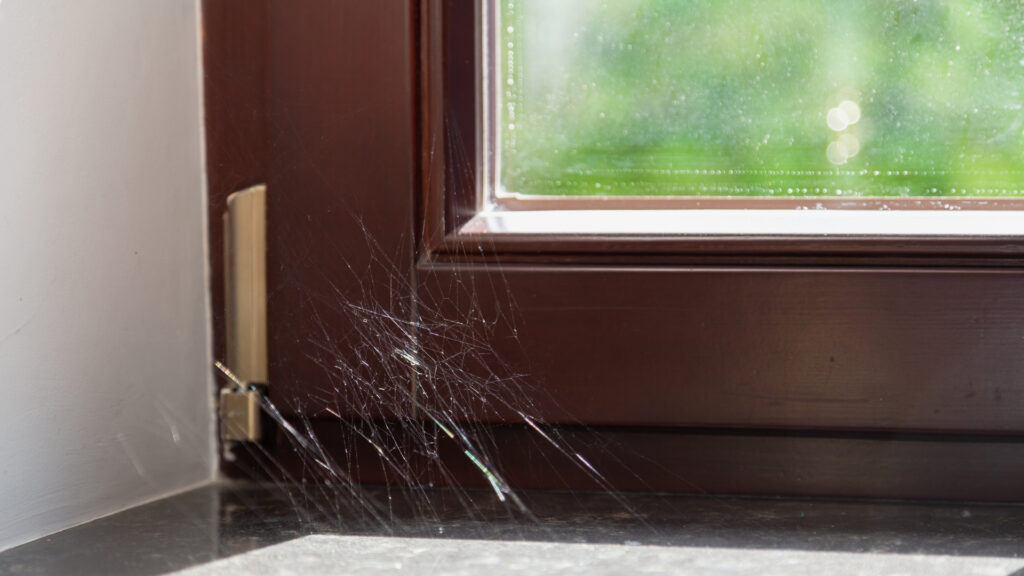
The web gives it away faster than the spider does. Southern house spiders spin messy, radiating webs from a single crack or hole, around window frames and in the gaps where brick meets siding.
The spider sits back in the crack and waits. Up close, the female has a velvety look and a body shaped a little like a small tarantula. That resemblance is a big part of why they startle people.
A few things separate them from the scary lookalikes:
- The web comes first: a messy tangle radiating out of one crack
- Females run dark brown to charcoal, an inch or more with legs spread
- Males look nothing alike, lighter and leggier, often out in the open
- Eight eyes set close together, not the recluse’s tell-tale six
Is the Southern House Spider Dangerous?
Here’s the reassuring part: not very. Southern house spiders aren’t aggressive, and they’d rather back into a crack than deal with you. They don’t carry the medically serious venom of a recluse or a widow.
For a spider this size and this common in SC homes, that’s about the best news you can get. They even earn their keep. One parked near a porch light works through a steady diet of the moths and gnats that gather there, and most homeowners never give them credit for it.
The one caveat is that almost any spider will bite if it gets trapped against bare skin, so they aren’t completely hands-off.
What a Kukulcania Bite Does
Most bites happen by accident, not aggression. A kukulcania hibernalis bite usually comes from the spider getting pressed against skin inside a glove or a shoe left out in the garage. Even then, it’s rare. For most people, the bite is mild.
Expect a little redness and swelling, with the soreness fading over a day or two, closer to a bee sting than anything you’d lose sleep over. If a bite blisters or comes with a fever, see a doctor, because a misidentified bite is better checked than guessed at.
Not a Brown Recluse: Telling Them Apart
This question is what we hear most: Southern house spider vs brown recluse, how do you tell them apart? The two look less alike than people fear. A recluse is small and tan, with a violin shape behind its head and only six eyes.
A southern house spider is bigger and hairier, and it builds the obvious webs a recluse never would. If you want the full side-by-side with photos, we keep a detailed brown recluse identification guide for South Carolina homeowners. For now, the rule of thumb holds: big and webby almost always means house spider, not recluse.
When to Get an ID From a Pro
Guessing wrong about a spider is stressful, and we understand that. If you’ve found one you can’t place, or you keep seeing the same kind, that’s the point of having someone confirm it in person.
We identify what’s living in the house and where it’s getting in, instead of leaving you to match it against a blurry photo at midnight. The ID also decides the treatment, since a harmless house spider and a recluse call for very different responses.
Why They Get Inside SC Homes
Most southern house spiders rarely leave the outside of the house. They set up on exterior walls and in the eaves, especially around lights that pull in insects at night.
The ones that end up indoors usually slipped through a gap or a torn screen, mostly males out searching for females. Cut down their food supply and close the easy entry points, and the indoor sightings drop off fast.
Keeping them outside is mostly about habits:
- Knock down exterior webs when you spot them, before they re-anchor
- Yellow exterior bulbs pull in fewer insects, so there’s less for spiders to eat
- A bead of caulk closes the gaps where pipes and vents pass through the wall
- Shut the garage in the evening, when the males do most of their wandering
Our spider control library goes deeper on prevention if you want the full rundown.
Where You Will Find Them Indoors
Indoors, they head for the spots that feel most like outside. The garage and basement top the list, along with any dark, humid corner that nobody disturbs.
Check behind stored boxes and along the bottom of basement walls. If you keep finding webs in the same corner, the spider is close by, because these aren’t spiders that roam far from a good web. Clearing out clutter takes away the quiet harborage they lean on.
Spider Control by Action Pest
A southern house spider on its own isn’t a threat, but a garage full of webs is a sign that the conditions are right for more than one kind of spider, and that’s hard to tell from a phone photo.
If the sightings keep adding up, or you’re not sure what you’re dealing with, let us take a look. We’ll confirm what you’ve got first. From there, it’s clearing out the webbing and sealing the gaps they’re slipping through, so the next box you move doesn’t come with a surprise.
Call us now: 864-399-9262
We serve homeowners across South Carolina, including: