
Ghost ants aren’t native to South Carolina, but the heat and humidity suit them fine. Coastal homes and well-heated structures inland can support a population year-round.
Ghost Ant Identification: Size, Color, and Behavior
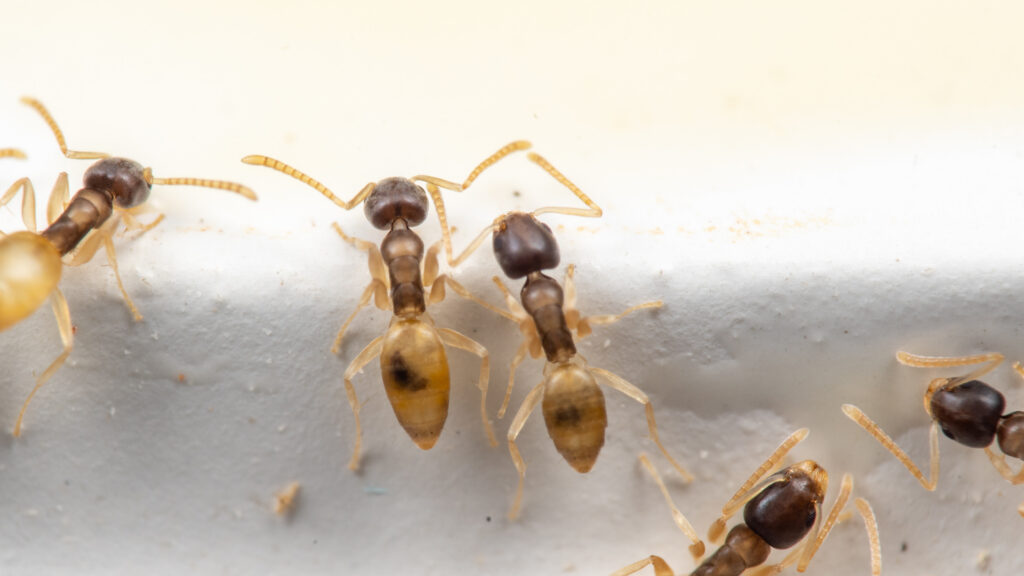
Start with the size. Ghost ants measure about 1/16 of an inch, smaller than the sugar ants most people picture. A dark brown head and thorax sit in front of an abdomen and legs so pale they look almost translucent on a white countertop. From two feet away, you’ll only see the head moving.
Crush one and the smell tells you the rest. Ghost ants release a coconut-like odor when squashed, the kind of smell people compare to rotten coconut.
Ghost ant vs sugar ant confusion comes up on almost every call. Most folks call us thinking they’ve got tiny white ants at first. Others search for small white ants in house spaces and never realize the body isn’t actually white. What’s pale is the abdomen and legs, not the whole body.
Sugar ants are bigger and fully colored. Their trails show up thicker and more obvious on a counter, where a ghost ant trail is so thin and faint you only catch it when light hits the surface right. For more on the lookalike, here’s how sugar ants show up in South Carolina kitchens.
What Attracts Ghost Ants to South Carolina Homes
Moisture pulls them in first. Bathrooms and kitchen sinks rank highest, and any dampness behind appliances catches them too. Sweet foods come second, especially anything sticky left on a counter or pantry shelf. Greasy residue on a stovetop works just as well.
If you’re wondering what ghost ants are doing inside in the first place, South Carolina’s long warm season keeps them active longer than ant species in cooler states. You’ll spot tiny pale ants in kitchen corners and along baseboards from spring through fall.
That pattern lines up with broader ant infestation signs across the state. If you want the full window, here’s when ant season hits SC.
What makes a ghost ant infestation harder than other ant problems is how the colony is built. One nest can have multiple queens, and the colony splits into satellite nests scattered across a single home. You might find activity in a kitchen and a bathroom on opposite ends of the house at the same time. They aren’t two separate problems. They’re one network.
How to Get Rid of Ghost Ants
Spray and you’ll make it worse. Hitting a ghost ant trail with over-the-counter aerosol scatters the workers and triggers something entomologists call budding. The colony splits into smaller groups and starts new nests elsewhere in the home. Two weeks later, you’ve got activity in three rooms instead of one.
How to get rid of ghost ants properly means using a slow-acting ghost ant bait that workers carry back to the nest. By the time the active ingredient reaches the queens, it’s already been shared through the colony by grooming.
Sweet baits work better than protein baits for this species. Bait stations need to sit right next to the active trail, too, not where you wish the ants weren’t showing up.
Cut their water supply at the same time. Fix slow drips under sinks. Wipe condensation off pipes. If you keep potted plants on a kitchen windowsill, lift them and check the saucer underneath, because ghost ants will nest in damp soil. For a backup layer, here’s a list of plants that repel ants.
DIY bait sometimes thins the visible trail but rarely clears the full network. Professional pest control for ghost ants uses non-repellent treatments that workers don’t detect as a threat, so they keep moving normally and pass the active ingredient through the colony.
Ghost ant pest control done right targets every satellite nest at once instead of chasing the trails room by room. Multi-queen species like these get covered across the ant control library with the treatment notes that match.
Tired of Ghost Ants Coming Back? Let’s Fix That for Good
Ghost ants don’t disappear when you stop seeing them. The colony’s still in the wall, still splitting into new pockets, and the trails come back the second you put the spray bottle away.
If you’ve already cycled through bait-and-hope once or twice, contact Action Pest Services before the next round of budding spreads into rooms you haven’t checked yet.