
Drain flies go by a few names. Sewer flies, moth flies, sink flies. Same insect. They’re tiny, gray to tan, and their wings look fuzzy because of fine hairs covering them. Crush one against the wall and it leaves a smudge instead of the clean splat you’d get from a fruit fly.
How Drain Flies Breed in Bathroom and Kitchen Drains
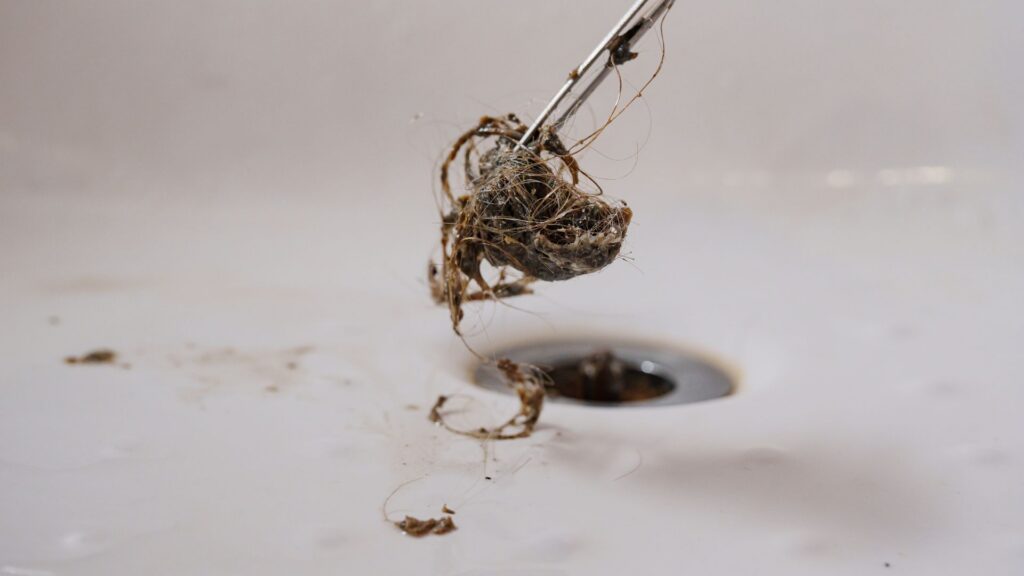
Drains build up an organic layer of slime on the inside of the pipe walls. Hair, soap residue, and food particles bond with grease and skin cells into what’s called biofilm. That gunk is exactly what causes drain flies. Females lay eggs directly into the slime, and drain fly larvae feed on it for about two weeks before maturing into adults.
A drain doesn’t have to be clogged for them to breed. Slow-running ones are the worst offenders, especially showers and tubs that don’t get used daily. Guest bathrooms here are a frequent source, partly because South Carolina humidity keeps biofilm wet even when nobody’s running water through the trap.
Drain flies in bathroom sinks usually trace back to the overflow opening or the pop-up stopper assembly, which collects far more grime than the visible drain itself.
Kitchens are a different story. Garbage disposals are the main breeding ground for drain flies in kitchen spaces. Food residue cakes onto the rubber splash guard and the underside of the disposal lip, both of which are basically impossible to see without pulling the whole assembly out. Floor drains in laundry rooms and basements take third place.
Signs You Have a Drain Fly Infestation
You’ll spot the adults first. Tiny flies in bathroom corners, on mirrors, or resting on tile near a drain are the most common giveaway. A drain fly infestation is mostly nocturnal, so morning sightings on a bathroom wall mean breeding activity overnight.
Run a quick test if you’re not sure which drain is the source. Tape a piece of clear plastic wrap loosely over a drain at bedtime, sticky side down, leaving a small gap for airflow. Check it in the morning. Adults emerging during the night will land on the underside of the plastic. The drain with flies stuck to the wrap is the one breeding them.
Other things to watch for:
- Adults clustered around a single fixture, not scattered across the home
- Larvae visible inside the drain when you shine a flashlight straight down
- A faint sour or musty smell from the drain that comes and goes
- Activity that worsens a day or two after heavy rain, since older sewer lines feed biofilm growth
If the flies are bigger, slower, and gathering at windows during cool weather instead, your problem is more likely cluster flies, which behave nothing like drain flies. Sorting through the different types of flies before treatment saves you from running the wrong protocol.
How to Get Rid of Drain Flies for Good
Pouring bleach down the drain is the first thing most people try, and it’s the first thing that doesn’t work. Bleach runs straight through the trap and barely contacts the biofilm coating the pipe walls above the water line. The slime stays. The eggs stay. New adults emerge a week later.
To get rid of drain flies properly, you need to scrub the biofilm out, not flush chemicals through it.
Cleaning Drain Biofilm and Eliminating Breeding Sites
Use a stiff metal drain brush long enough to reach a foot or more down the pipe. Scrub the inside walls aggressively, pulling up as much biofilm as the brush can grab. Repeat for every drain that tested positive on the plastic wrap check.
For garbage disposals, lift the rubber splash guard and scrub the underside with a kitchen brush, then run ice cubes and rock salt through the disposal to scour the grinding chamber.
Follow the brush with an enzyme-based drain cleaner, not bleach. Enzyme cleaners use bacteria that digest organic matter, and they keep working in the pipe for hours instead of running through in seconds. Pour at night so the enzymes sit in the drain undisturbed until morning.
Cover the bedroom and bathroom drains with a stopper for two weeks afterward to break the breeding cycle. Adult drain flies live about 20 days, so consistent denial of egg-laying surfaces clears a population without further treatment.
When controlling drain flies stops working at the homeowner level, the biofilm is usually deeper in the system than a brush can reach, or it’s coating a section of pipe behind a wall. Pest control for drain flies combines targeted enzyme treatments with inspection of vent stacks, P-traps, and sewer line connections that DIY can’t access.
Still Seeing Drain Flies? Action Pest Services Can Help
A clean kitchen and a tidy bathroom don’t keep drain flies away. Biofilm builds in pipes regardless of how often you mop.
If you’ve already scrubbed every drain, run enzyme cleaner, and the moth flies in bathroom corners keep coming back, the breeding source is past where a brush can reach. Contact Action Pest Services and we’ll track down the drain that’s feeding the population.