
Most homeowners miss the early termite signs because the giveaway clues sit in places nobody checks. Crawl space walls and the lower inch of a baseboard hide the bulk of it. To tell if you have termites, look at where they actually travel.
Termite Mud Tubes, Frass, and Droppings
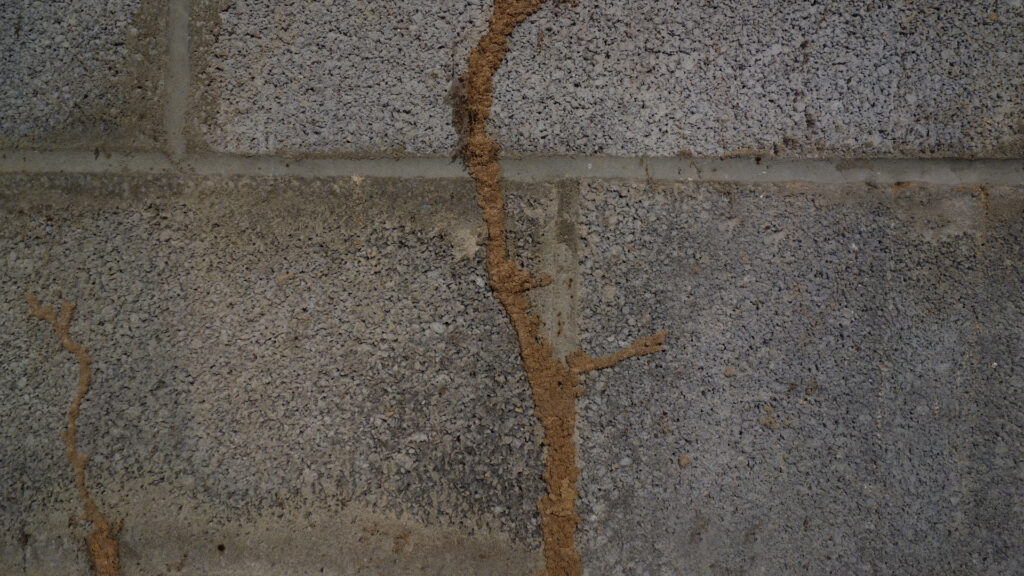
Nothing gives subterranean termites away faster than the mud tubes they build to travel. Look for pencil-width tunnels of dried mud running up foundation walls or across pier blocks in a crawl space.
Workers stay inside those tubes for the entire trip from soil to wood. Termite mud tubes seal them off from the open air, and open air dries subterranean termites out within hours. Break one open. If pale, cream-colored insects spill out, you’ve confirmed an active infestation.
Not every species leaves visible droppings. Subterranean termites pack their waste into the mud tubes, so you won’t see loose piles around your home. Visible termite frass comes from drywood termites instead. Termite droppings from a drywood colony look like tiny six-sided pellets, the color of the wood being eaten.
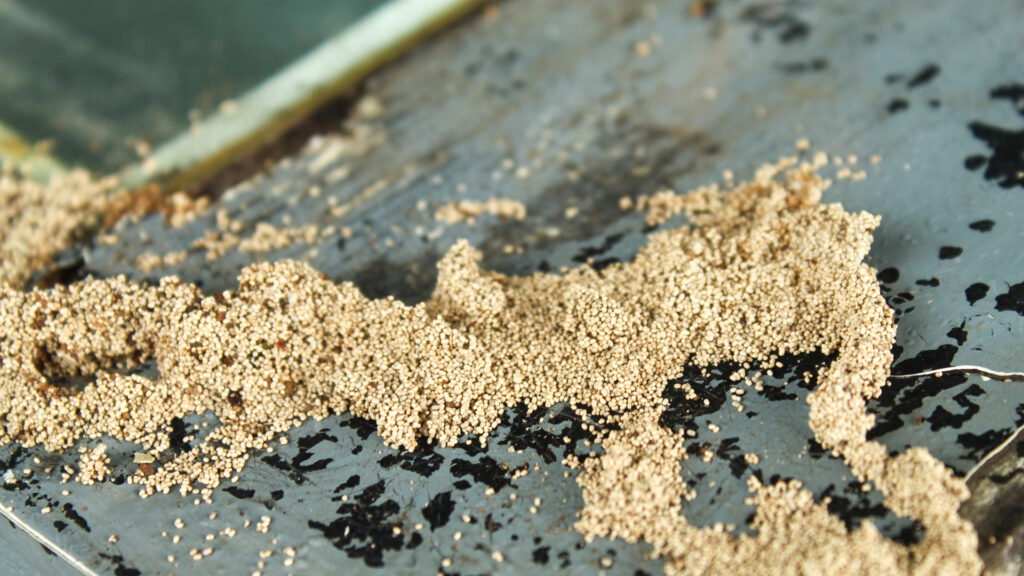
Drywood termites are less common inland than subterranean, but coastal South Carolina homes see them. Small piles of what look like coffee grounds under a window frame are worth a second look.
Flying Termites and Swarmers in Your Home
Watch for swarms in spring. South Carolina’s subterranean termite swarmers take flight on warm, humid days from March through May, usually right after a rain.
Flying termites in house spaces almost always mean a colony is already established on or near the property. Swarmers don’t travel far from the parent nest. Look for them around windows and interior light fixtures.
Discarded wings on a windowsill are the giveaway, even after the swarmers themselves have died off. People mix them up with flying ants constantly. Here’s how to tell them apart:
- Wing length: termite wings match, ant wings don’t
- Antennae are straight and beaded on a termite, bent at a joint on an ant
- Body shape gives it away. Ants have a pinched waist; termites stay uniform end to end
If wings turn up indoors and you can’t trace them to an open door, schedule a professional termite inspection. A trained eye picks up colony activity that hasn’t surfaced yet.
What Termite Damage Looks Like Inside Your Walls
Wondering what termite damage looks like behind drywall? It rarely looks like termites. Most of the time, it reads as water damage or aging trim, which is exactly why it gets overlooked.
Tap your baseboards and lower wall sections with a screwdriver handle. Healthy wood gives a solid thud. Termite-damaged wood sounds hollow. Papery in spots. Once you’ve heard it, you’ll catch it the next time.
Bubbling or peeling paint with no plumbing leak above is another red flag. Termites push moisture into the back of the drywall as they feed, and the paint eventually lets go. Faint clicking inside a wall at night, a noise soldier termites make when disturbed, gives some colonies away in quiet rooms.
Look closely at drywall in older rooms and laundry areas. Pinhole openings sealed with a brown putty-like material are how workers keep moisture in, and they’re one of the clearest signs of termites in walls. Anywhere paint or wood feels softer than it should, look closer.
Drywall, Wood, and Structural Warning Signs
Doors and windows that suddenly stick aren’t always a humidity issue. Termites chew through structural framing in ways that warp openings and shift weight onto frames not built to carry it. Spongy floors underfoot or trim pulling slightly away from the wall both point to feeding behind the surface. Laminate planks buckling along a seam tell the same story.
Cut a damaged board open and the termite damage signs become obvious. Subterranean activity shows up as mud-streaked tunnels running with the grain. Drywood damage looks different. Cleaner galleries, no mud, packed with those six-sided pellets. Structural wood that looks intact from the outside can be hollow within an inch of the surface.
Some homeowners reach for DIY treatments when termite infestation signs still look minor. If you’re weighing that route, read up on what boric acid actually does for termite control before applying anything yourself. Spot treatments don’t reach the queen, and the colony rebuilds.
Protect Your Home Before Termites Cause Serious Damage
A spring swarm or a single mud tube along a crawl space wall doesn’t sound like a major problem yet, but it rarely stays that way for long. Subterranean colonies in South Carolina feed year-round, and waiting until doors stop closing turns a manageable treatment into structural repair.
Contact Action Pest Services for an inspection and a termite control plan built around what’s actually happening inside your home.