
A carpenter bee sting catches most people off guard, mainly because these bees aren’t known for being aggressive. Only female carpenter bees sting, and they rarely do unless you handle them directly or corner them.
That said, if you’ve been stung in your South Carolina yard, you need to know what to do next and how to stop it from happening again.
How to Get the Bee Stinger Out
Unlike honey bees, carpenter bees don’t have barbed stingers, so they rarely leave one behind. Even so, check the sting site before treating it, especially if the area feels unusually irritated or if you can see something embedded in the skin.
If a stinger is present:
- Scrape it out with a flat edge, such as a credit card or your fingernail. Avoid tweezers, which can squeeze more venom into the wound.
- Work quickly. The longer it stays in, the more venom is released.
- Rinse the area thoroughly with soap and water once it’s out.
Most carpenter bee sting situations won’t require this step, but it takes seconds to check and saves you unnecessary discomfort.
How to Relieve Carpenter Bee Sting Symptoms
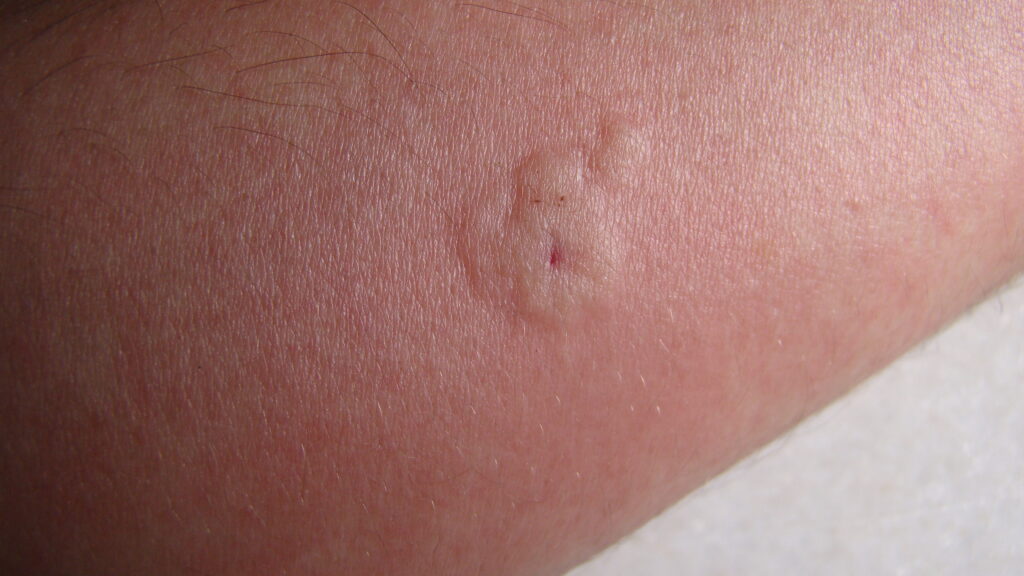
Localized pain, redness, and swelling are normal after a sting. A practical bee sting remedy starts with what you likely already have at home:
- Cold compress: Wrap ice in a cloth and apply it to the sting site for 10 to 15 minutes to bring swelling down. Never place ice directly on skin.
- Baking soda paste: Mix baking soda with a small amount of water and apply it to the sting site to help neutralize venom and ease irritation.
- Hydrocortisone cream or oral antihistamine: Both work well to calm itching and reduce inflammation.
- Over-the-counter pain reliever: Ibuprofen or acetaminophen handles any lingering pain at the sting site.
Keep the area clean and avoid scratching it. Most reactions stay mild and clear up within a few hours to a day.
When to Seek Medical Help
Mild swelling and discomfort are expected. What you’re watching for is a reaction that spreads beyond the sting site or escalates quickly.
Seek emergency care if you notice:
- Swelling moving toward your face, throat, or lips
- Difficulty breathing or swallowing
- Dizziness, nausea, or a rapid heartbeat
- Hives or itching spreading across your body
These are signs of anaphylaxis, a severe allergic reaction that needs immediate attention. If an epinephrine auto-injector is available, use it and call 911 right away. While waiting for help, keep the person calm, lying down with their legs elevated unless breathing is difficult. Even if symptoms ease after using the injector, get evaluated. Reactions can return.
For most people, a carpenter bee sting is uncomfortable rather than dangerous. If you’ve had a strong reaction to bee stings before, treat any new sting seriously from the start.
How to Keep Carpenter Bees Away from Your Home
Treating a sting handles the immediate problem. Preventing future encounters takes a bit more intention. Carpenter bees in South Carolina drill into unfinished or weathered wood to nest. Your deck, eaves, fence posts, and wood trim are all fair targets.
Because the state’s mild winters don’t slow them down as much as in colder climates, nesting season starts earlier and runs longer, which means more opportunities for established colonies to grow before most homeowners notice.
A few practical steps cut that risk down considerably:
- Paint or seal exposed wood: Carpenter bees strongly prefer bare, untreated surfaces. A coat of paint or stain removes that appeal.
- Fill existing holes: Plug abandoned tunnels before a new season starts. Open tunnels invite reuse year after year.
- Opt for hardwoods where possible: Softer woods like pine attract more drilling than dense hardwoods.
- Hang decoy nests: Fake wasp nests deter carpenter bees from certain spots, though results vary by situation.
Structural damage from carpenter bees builds quietly over time through weakened wood, water intrusion, and secondary pest activity that follows. If you’re already seeing active tunneling on your property, getting ahead of it matters because carpenter bee damage left unaddressed tends to worsen over time.
Contact Action Pest for Your Carpenter Bee Removal
Prevention steps reduce risk, but once carpenter bees establish nesting sites on your property, carpenter bee treatment usually goes beyond patching holes. Tunnels run several inches deep, and females return to the same spots each year without professional intervention.
Carpenter bee pest control from Action Pest Services covers active nest location, tunnel treatment, and targeted protection for the wood surfaces most at risk on your property. South Carolina’s climate keeps these bees active for a long stretch of the year, so the sooner you address it, the better.If bees are drilling into your home or you keep getting stung in your own yard, contact Action Pest Services and get a treatment plan in place before the damage adds up.