
Something got you in the yard, and now you’re staring at a red bump trying to work out what it was. The bite itself usually tells the story once you know what to look for. Let’s start with the question we hear most.
Do ants bite or sting? Both, depending on the ant. Most ants bite with their jaws to grab your skin. Fire ants and a few others go further, biting to hold on and then stinging to inject venom. That sting is what makes a fire ant welt burn and blister, while a mosquito only ever bites and slips away.
Do Ants Bite or Sting?
The short version is both, but the two actions are separate. The bite is the grip, the jaws clamping down so the ant can hold its position. The sting comes from the rear, like a tiny wasp, and that’s where the venom goes in.
Plenty of common house ants only bite, and you’ll barely feel it. The little ones trailing across your counter, like odorous house ants, bite at most and rarely break the skin. The ones that send people looking for answers are the stingers, and in South Carolina that almost always means fire ants. So do ants bite or sting? With fire ants, it’s both, in that order.
Why Fire Ants Hurt the Most
Fire ants don’t sting once. Disturb the mound and dozens swarm up a leg, each one pivoting to land several stings in a tight ring. The venom is an alkaloid called solenopsin, and it’s what turns a fire ant sting into a burning welt that blisters into a white pustule within a day.
In South Carolina’s heat, those mounds turn up fast in open lawns and anywhere the soil stays a little moist. Step on one barefoot in July and you’ll understand the name. If you’ve got mounds in the yard, our guides to fire ants in South Carolina and red ants in South Carolina walk through how to handle them.
What Do Ant Bites Look Like?
Ant bites cluster in one spot, since the ant that got you usually had company. A fire ant bite starts as a red bump and turns into a raised white pustule within about 24 hours, sometimes ringed by inflamed skin. That pustule is the giveaway. No mosquito bite does that.
A few quick tells separate the two:
- Fire ant bites cluster in one area; mosquito bites scatter
- A white pustule means fire ant, never mosquito
- Mosquito welts itch first, while fire ant welts burn first
- Ant bites land where skin meets the ground or a mound
How Mosquito Bites Compare
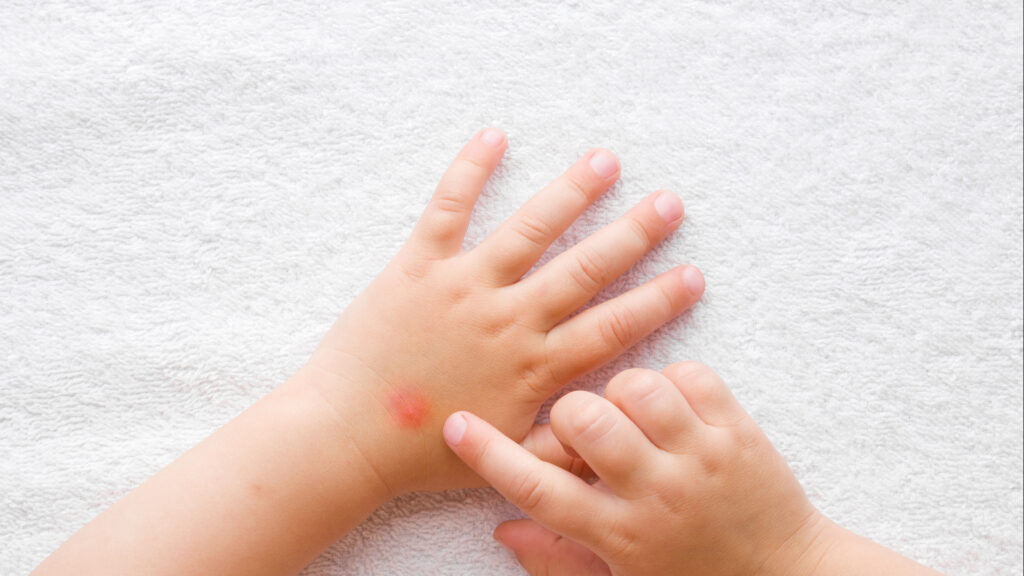
Mosquito bites go the other way. They show up as small, soft welts, pink or red and scattered across whatever skin was exposed rather than grouped in one place. Within minutes, they start itching, and it builds over the next few hours.
Where a fire ant announces itself with a burn, a mosquito bite is painless at first and only turns annoying later. The itch comes from your body reacting to proteins in the mosquito’s saliva. Some people barely swell, while others swell badly from the same bite.
How Long Do Ant Bites Last?
A fire ant pustule usually takes about a week to clear, longer if it gets scratched open and infected. The burning fades within an hour or two, but the bump and the itch hang around for days.
Mosquito bites move faster, generally gone in three to four days unless your body reacts more strongly. For most people, both are nuisances that heal on their own. Scratching is what drags it out. Break a pustule open and you trade a week of itch for an infection that can last a good deal longer.
When a Bite Needs a Doctor
Most bites need nothing more than patience. A few need more than that. Fire ant venom sets off serious allergic reactions in some people, and those can move fast. Get medical help right away if you notice any of these after a sting:
- Breathing gets hard or your throat feels tight
- Swelling spreads to the face, lips, or tongue
- You feel dizzy, sick to your stomach, or your heart races
- Hives show up well beyond the original sting
How to Treat Ant and Mosquito Bites
Treatment for both starts the same way: wash the area with soap and water, and resist the urge to scratch. From there, they split a little. For ant bite treatment, a cold compress reduces the swelling and redness, and an antihistamine or a dab of hydrocortisone helps with the itch.
If a fire ant pustule forms, leave it alone, because popping it invites infection. Mosquito bites need even less: cool the spot, use an anti-itch cream, and let it heal. For a cluster of fire ant stings, an oral antihistamine does more than spot-treating each welt one at a time, and keeping the limb raised helps the swelling settle.
How to Keep From Getting Bitten
The surest fix is fewer ants and mosquitoes around the house in the first place. Sealed food and wiped-up crumbs give ants no reason to trail inside.
Empty anything holding standing water so mosquitoes can’t breed in it. Fire ant mounds deserve a wide berth, because one wrong step sets off the whole colony. When the bites keep coming anyway, our ant control library covers what to do next.
Ant and Mosquito Control by Action Pest
A single bite is easy enough to treat. A yard full of fire ant mounds or a summer of fresh mosquito welts is a sign the problem is bigger than a tube of cream. If you’re treating the same bites week after week, let us deal with the source. We’ll knock down the colonies and the breeding sites so you can get back outside without paying for it the next morning.
Call us now: 864-399-9262
We serve homeowners across the Upstate, including: