
Red, raised, itchy. Most bites look the same in the first few minutes, and if you didn’t see what got you, the mark alone doesn’t tell you much. The differences that matter show up later, and knowing what to look for helps you figure out what bit you, whether the reaction is normal, and when it’s worth getting medical attention.
Ant bites and spider bites are two of the most commonly confused, partly because both can produce similar initial symptoms and partly because most people never see what bit them.
How to Identify an Ant Bite
Two ant species account for most bites in South Carolina: fire ants and smaller nuisance species like odorous house ants and pavement ants. The experience is different depending on which one was involved, and so is the mark it leaves behind.
Fire Ant Bites vs. Other Ant Bites
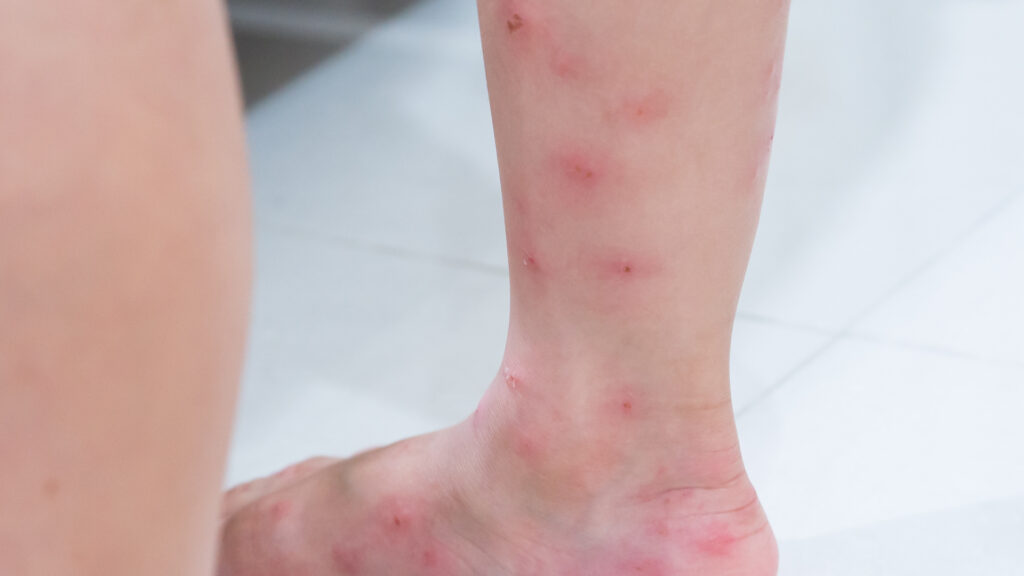
The immediate burning sensation is what sets fire ant bites apart from everything else. A cluster of red raised welts appears at the sting sites within minutes, and between 6 and 24 hours later, those welts develop into fluid-filled pustules with white tips.
That progression is the clearest visual sign that fire ants were involved. No other common insect in South Carolina produces it consistently.
A pavement ant or odorous house ant bite looks nothing like that. Small red mark, mild itch, gone in a day or two. No burning, no pustules, no bad swelling. If the bite is itchy but otherwise unremarkable, a smaller species is almost certainly what was involved.
One other thing worth checking: the pattern. Fire ant bites appear in groups because fire ants anchor themselves in place and sting repeatedly. A single isolated mark is much more likely to be from a smaller ant or a mosquito. Our page on ant bites versus mosquito bites breaks down the visual differences in more detail.
How to Identify a Spider Bite
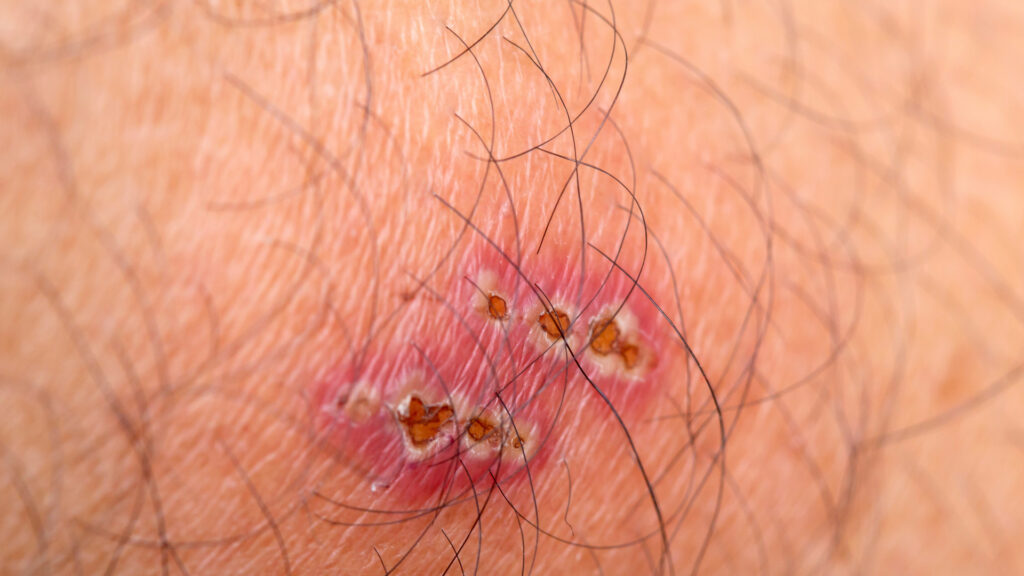
Spider bites are rarer than most people assume. Spiders bite defensively, not aggressively, and most skin reactions people blame on spider bites are actually something else when examined closely. That said, South Carolina has two species whose bites produce serious reactions: the brown recluse and the black widow.
Brown Recluse and Black Widow Signs
The first few hours after a brown recluse bite can be deceptively mild. The initial contact is painless or produces only minor discomfort. Then a distinctive pattern develops at the site: a pale center surrounded by a red ring.
In more serious cases, the tissue at the center begins to break down, producing an open wound that requires medical treatment. Not every brown recluse bite reaches that point, but any bite that develops a pale or darkening center surrounded by redness is worth a doctor’s visit.
A black widow bite announces itself differently. The bite is a sharp pinprick, and the local reaction at the site stays mild. What develops afterward is the problem: muscle cramps, pain that spreads away from the bite site, nausea, and sweating. Those full-body symptoms can come on within an hour and may need medical treatment.
Our page on South Carolina spiders covers both species in more detail, including where they’re commonly found around Upstate homes.
Ant Bite vs. Spider Bite: Key Differences
Two things reliably separate them: pattern and progression. Fire ant bites appear in clusters, with characteristic pustule formation. Spider bites are almost always single marks that either stay mild or develop specific signs like the bull’s-eye pattern of a brown recluse or the spreading pain of a black widow.
Where the bite happened is useful information, too. A bite that appears after walking through grass or disturbing an outdoor area strongly points to fire ants. Spider bites tend to happen when someone reaches into an undisturbed space, puts on clothing that’s been sitting out, or rolls onto a spider in bed.
When to See a Doctor
Home treatment handles most ant and spider bites without issue. A fire ant sting that stays local, a mild bite from a smaller species, or a spider bite producing only minor irritation all fall within the manageable range. The situations that push beyond that are more specific.
Symptoms That Indicate Venom Reaction
Watch for a reaction that spreads well beyond the sting site after fire ant bites. Hives or flushing on parts of the body that weren’t stung, difficulty breathing, or dizziness are signs of anaphylaxis and need emergency medical attention fast.
Spider bites tell a different story. A site that develops a pale or darkened center with expanding redness within the first 24 to 48 hours suggests a brown recluse bite that’s progressing.
Full-body symptoms after a suspected black widow bite need medical attention, regardless of how mild the bite site itself looks. Muscle cramps, radiating pain, or nausea developing within an hour or two are the signs to watch for.
If you’re dealing with recurring ant activity in the yard or finding spiders in spaces where people spend time, our brown recluse South Carolina page covers where to look and what draws them in, and our ant control page covers treatment options for fire ants and other species active across the Upstate.
Get Ant and Spider Control in SC Today
Fire ant mounds in the yard and spiders inside the home are both problems that don’t tend to get smaller on their own. If you’re seeing activity around your property or want to reduce the risk before someone gets bitten, we can help. Call us at 864-399-9262 or contact us online to schedule service.
We serve homeowners in: