
Most people know they’ve been stung before they know which insect did it. Up close, honey bees and yellow jackets look similar enough to cause real confusion, but their behavior, nesting habits, and the risk they pose are genuinely different.
Getting that distinction right matters, especially in South Carolina, where both stay active from spring well into fall.
How to Identify Honey Bees vs Yellow Jackets
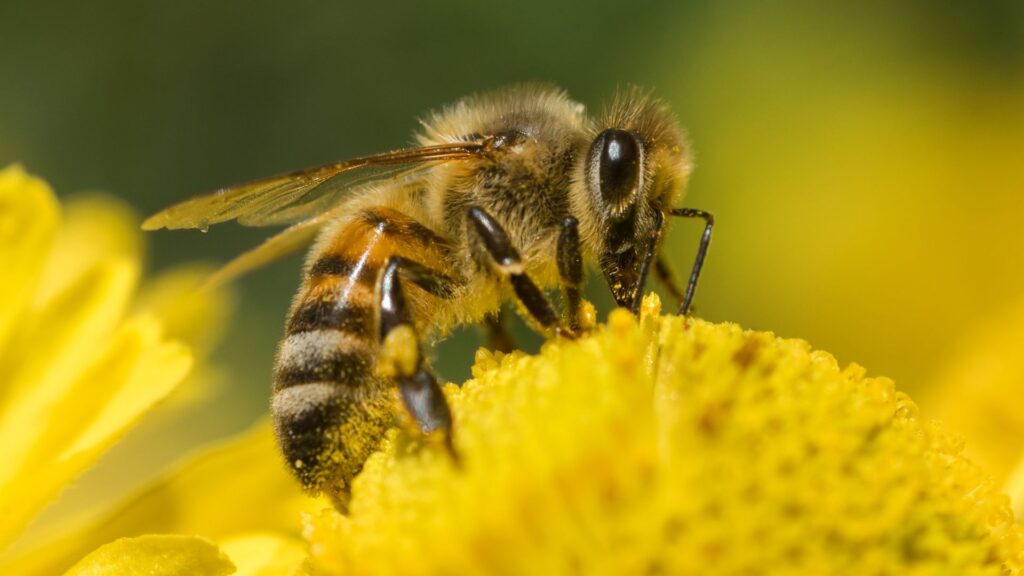
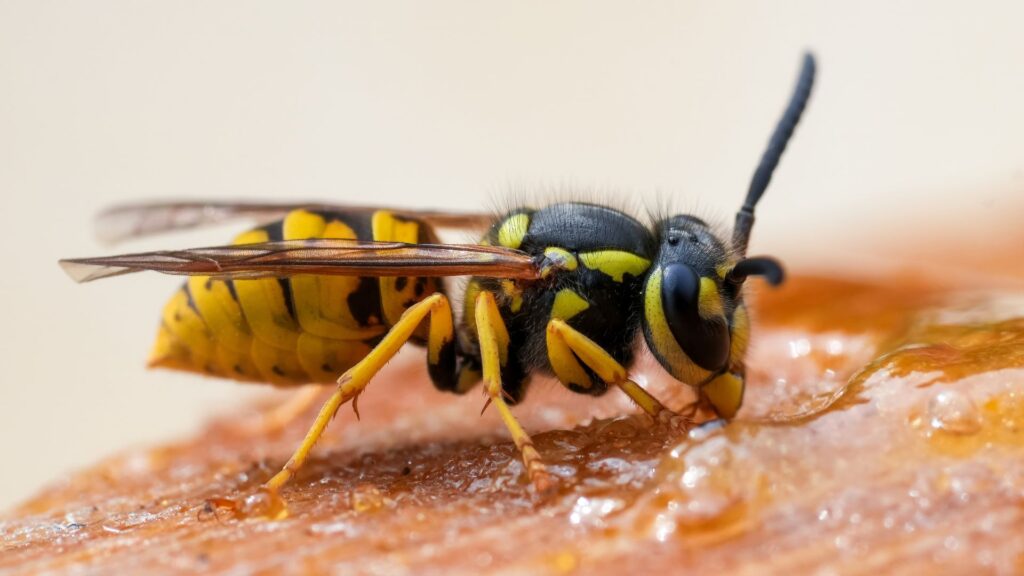
Honey bee insects are rounder and more robust than yellow jackets, with a fuzzy tan-to-amber body covered in fine hair that collects pollen. That fuzz is one of the easiest distinguishing features you’ll notice immediately. Yellow jackets are slimmer, shinier, and carry a more defined black-and-yellow banding pattern with almost no visible hair on their bodies.
Flight behavior tells you even more than appearance. A honey bee moving between flowers is focused and relatively calm. Yellow jackets move faster, hover erratically, and frequently investigate food sources that have nothing to do with flowers — open drinks, grilled meat, garbage bins. If an insect is circling your sweet tea at a backyard cookout, it isn’t a honey bee.
Honey bee colonies exist entirely around the hive. Tens of thousands of workers support a single queen, protect developing larvae, and defend stored honey. That investment in the colony is why honey bees typically only sting when they feel directly threatened.
A bee nest or small bee hive found on your property warrants caution, but it doesn’t carry the same urgency as a yellow jacket situation.
Yellow jackets operate on entirely different logic. They’re predatory wasps that feed on other insects and scavenge protein and sugar from human food. Their colonies start from scratch each spring when a yellow jacket queen emerges from winter shelter and begins building alone.
By late summer, that same colony can hold thousands of workers and respond aggressively to disturbance, sometimes without much provocation at all.
Honey Bee vs Yellow Jacket Stings and Safety
A yellow jacket sting is sharp, immediate, and can be delivered multiple times by the same insect. Unlike honey bees, yellow jackets don’t lose their stinger on contact, which means one agitated worker can sting repeatedly before you’ve had a chance to move away. That changes the situation fast when you’re near a nest.
How painful is a bee sting compared to a yellow jacket? Most people describe honey bee stings as a single moderate burst of pain followed by localized swelling. Yellow jacket stings tend to feel more intense and longer-lasting, partly because of venom composition and partly because multiple stings often happen in quick succession.
Both insects can trigger allergic reactions, ranging from localized swelling to anaphylaxis in severe cases. Yellow jackets carry a higher practical risk because their defensive response is faster and more coordinated.
Stepping near a ground nest or unknowingly disturbing a wall void colony can produce a swarm response within seconds, before you’ve registered what’s happening.
What to Do If You Encounter a Honey Bee or Yellow Jacket
Move away slowly and don’t swat. Running or flailing triggers a defensive response faster than almost anything else. With honey bees, especially, slow, deliberate movement gives workers time to lose interest and return to foraging.
Yellow jackets and honey bees require different decisions when you find a nest on your property. A honey bee colony that has set up inside a wall cavity or tree may qualify for relocation through a local beekeeper rather than extermination. It’s worth a call before assuming removal is the only path.
Yellow jacket colonies don’t carry the same consideration. They’re predatory, territorial, and they build fast. A colony that looks manageable in June can be a serious problem by August.
Removing them isn’t a judgment call, the way a honey bee situation sometimes is. The nest has to come out, and how you approach it matters, because wasps, yellow jackets, and hornets all respond differently to disturbance. Treating the wrong nest the wrong way makes the situation significantly worse before it gets better.
Yellow Jacket Control and Deterrence
Finding a yellow jacket nest in a wall is harder than it sounds. Workers typically enter through a single gap in siding, around a window frame, or through a crack near the foundation.
Consistent flight traffic moving in and out of one specific spot is the tell. The entry point is visible. The nest itself may be several feet inside the wall cavity, where you can’t see or safely reach it.
A natural yellow jacket deterrent can reduce activity around specific outdoor areas. Peppermint oil near entry points, decoy nests hung early in spring, and tightly sealed garbage bins and outdoor food containers all discourage scouts from choosing your property. These work as prevention. Once a colony is established, deterrents won’t move them out.
Timing matters more with yellow jackets than with most pests. Colonies are smallest in spring and early summer, which is when intervention is most straightforward. By August, worker populations have peaked and their defensive behavior runs hotter. A nest that could have been treated in an hour in May takes considerably more preparation, and risk, in late summer.
Professional Yellow Jacket Removal Services
Yellow jacket colonies peak in late summer, and by the time most South Carolina homeowners realize what’s in their wall, the nest is already thousands of workers deep.
That flight pattern you’ve been watching near the siding gap isn’t going to resolve on its own. Call Action Pest today and get a same-day assessment before that colony gets any harder to remove.