
Small holes in your drywall that you don’t remember making are worth paying attention to. In South Carolina, where subterranean and drywood termite pressure runs high most of the year, pinholes in drywall are often the first visible sign that something has been working through your walls for a while.
By the time you notice them, the damage inside is usually further along than the surface suggests.
Termite Pinhole Identification and Causes
Termite pinholes are tiny exit points, roughly the diameter of a push pin, that appear on drywall surfaces, ceilings, or baseboards. Drywood termites create them when worker termites push termite frass out of the colony to keep their tunnels clear.
That frass collects in small piles beneath the holes, looking like fine sawdust or tiny pellets with six flattened sides. That specific shape distinguishes it from other pest debris and points directly to drywood termite activity.
Pin holes in the ceiling or along upper wall sections tend to appear when drywood termites have worked into the roof framing or attic spaces. Finding a cluster of these holes in one area usually means the colony has been active long enough that waste removal has become necessary.
A single hole might look like nothing. A pattern of them across the same wall or ceiling panel tells a different story.
Signs of Termite Damage in Drywall
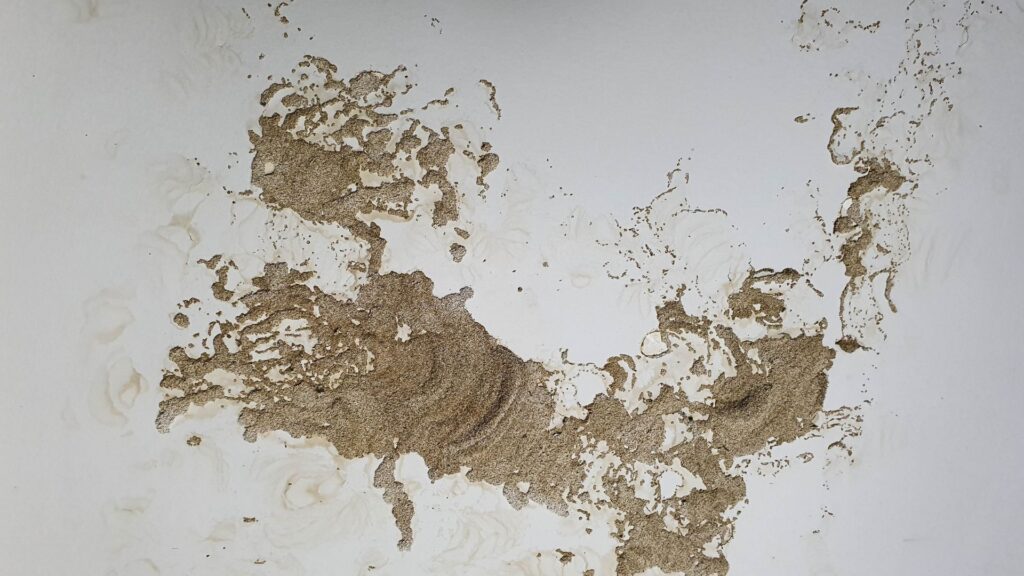
Pinholes are one indicator, but signs of termites in drywall typically show up together rather than in isolation. Paint that bubbles or peels without any moisture source nearby points to activity beneath the surface.
Drywall that sounds hollow when tapped, soft spots you can press with a finger, or visible buckling along a wall’s surface all suggest termite damage to interior walls that’s been building for some time.
Termites in the ceiling leave a slightly different pattern. Sections that sag gradually, hairline cracks that widen without explanation, and discoloration that doesn’t match typical water staining are all worth a closer look.
Termite damage to drywall compounds quickly because the paper facing is a food source on its own. Termites consume it from the back side while the painted surface looks intact from the front, which is what makes the damage so deceptive until it’s already significant.
Termite Types and Their Damage
Two species account for most of the termite damage in South Carolina homes. Subterranean termites enter through the soil and build mud tubes along foundation walls and floor joists. Worker termites do the bulk of the feeding and stay hidden inside whatever material they’re consuming. You rarely see them directly until damage is already widespread.
Drywood termites don’t need soil contact. They enter through exposed wood, attic vents, or small gaps around window and door frames, and their colonies live entirely within the material they’re eating. That’s why frass pushed through pinholes is often the only external evidence of an active colony.
If you’ve spotted winged termites near a window or interior light fixture, a reproductive swarm has already occurred, which means an established colony is somewhere nearby.
DIY Termite Pinhole Solutions
There’s a real limit to what DIY products accomplish once termites are inside drywall or structural framing. A few steps make sense while you arrange a professional assessment, but none of them substitute for it.
Termite removal DIY options like foam termiticides or borate-based sprays treat surface-level entry points in exposed wood. They work as contact treatments, not colony eliminators.
Borate sprays applied to attic framing or crawl space wood do offer preventive protection when used correctly, and they’re worth adding after professional treatment is complete. Getting ahead of re-entry is where they perform best.
Over-the-counter bait stations placed around your foundation can intercept foraging subterranean termites, but placement gaps are common without a full perimeter plan. They’re not a substitute for professional termite control when an active infestation is already confirmed inside your walls.
Termite Pinhole Repair and Prevention in Drywall
Termite damage repair starts after the infestation is fully eliminated, not before. Patching pinholes over an active colony traps frass inside the wall and can push activity into adjacent sections.
Once treatment is confirmed complete, small pinholes fill cleanly with lightweight spackling compound. Larger areas are a different job. Cut out the damaged section, check the framing behind it directly, and replace any compromised studs or blocking before new drywall goes in.
On the prevention side, a few conditions consistently invite termite entry. Gaps around utility penetrations, wood mulch sitting against your foundation, moisture collecting in crawl spaces, and unscreened attic vents are the access points they use most often. Addressing those after treatment reduces the odds of re-entry significantly.
South Carolina’s humidity accelerates wood softening, and softened wood draws activity faster than sound, dry framing. A termite inspection in Easley, SC is designed to find early-stage colonies before they’ve had time to reach the drywall.
Professional Termite Inspection and Diagnosis
Pinholes don’t stay a cosmetic problem for long. If you’re seeing frass on your floor, hollow-sounding walls, or exit holes that keep appearing in new spots, the colony is established and actively expanding. South Carolina’s climate doesn’t give termites a long off-season, which means the window between early signs and real structural damage is shorter than most homeowners expect.
Action Pest’s inspections go past the drywall surface into the framing and crawl spaces where the actual activity lives, not just the areas that are already visible. Contact Action Pest today before what’s inside your walls turns into a structural repair job.