
Flies don’t just show up randomly. In South Carolina’s heat and humidity, your home gives them exactly the warmth, moisture, and food they need. Once they find it, they breed fast.
Knowing which types of flies you’re dealing with tells you where to look, what’s attracting them, and how to stop them.
Common Types of Flies Found in Homes
Walk into most South Carolina homes during summer, and you’ll likely cross paths with at least one of three common types of flies. Each different fly species has its own breeding habits, preferred environment, and warning signs. Identifying them correctly saves you time and keeps you from treating the wrong problem.
House Flies
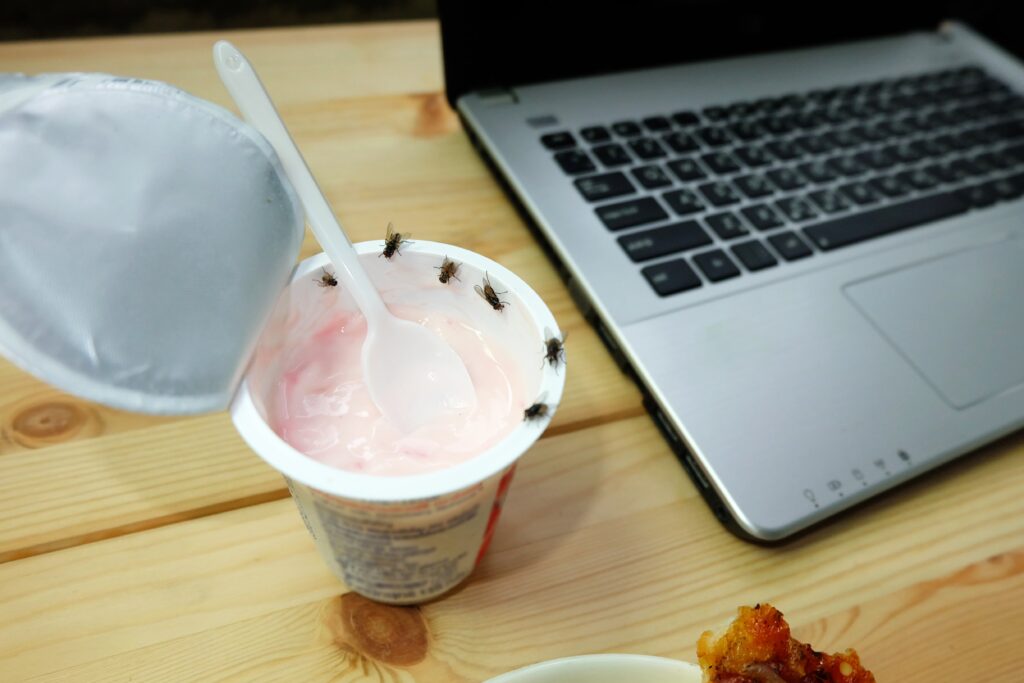
House flies are one of the most recognizable types of large flies you’ll encounter indoors. Gray-bodied, about ¼ inch long, and constantly landing on surfaces they have no business touching, like your food, countertops, and dishes, included. They’re drawn to garbage, pet waste, and any decaying organic matter they can find.
What makes them particularly problematic is how they feed. House flies don’t bite, but they regurgitate saliva onto surfaces before consuming it, transferring bacteria directly onto everything they land on. They breed in warm, decaying material and can go from egg to adult in under two weeks. In South Carolina summers, that timeline shortens considerably.
Fruit Flies
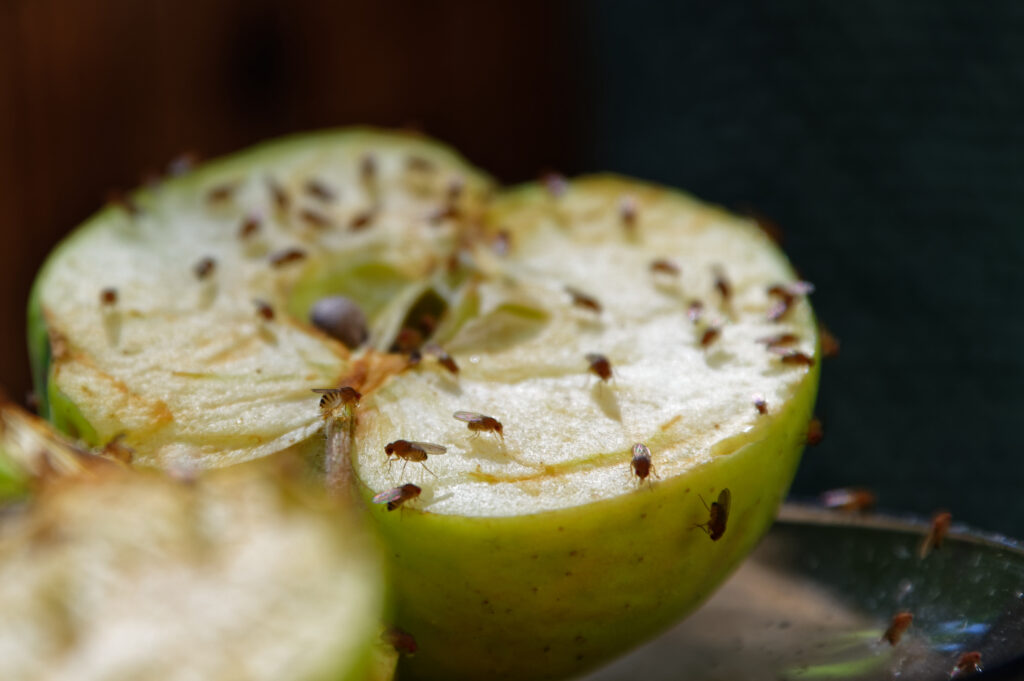
Fruit flies are tiny, barely ⅛ inch, but they’re persistent. You’ll spot them hovering near overripe produce, open bottles, or kitchen drains. Fermentation and moisture are what pull them in, and South Carolina kitchens during warm months offer both in abundance.
Most homeowners often wonder if fruit flies turn into maggots. They do. Fruit flies go through a full life cycle: egg, larva (maggot), pupa, adult. Females deposit eggs on or near fermenting food, and larvae feed on that material until they pupate.
Tossing overripe produce, cleaning drains regularly, and sealing your garbage bins cuts off their breeding cycle at the source.
Drain Flies
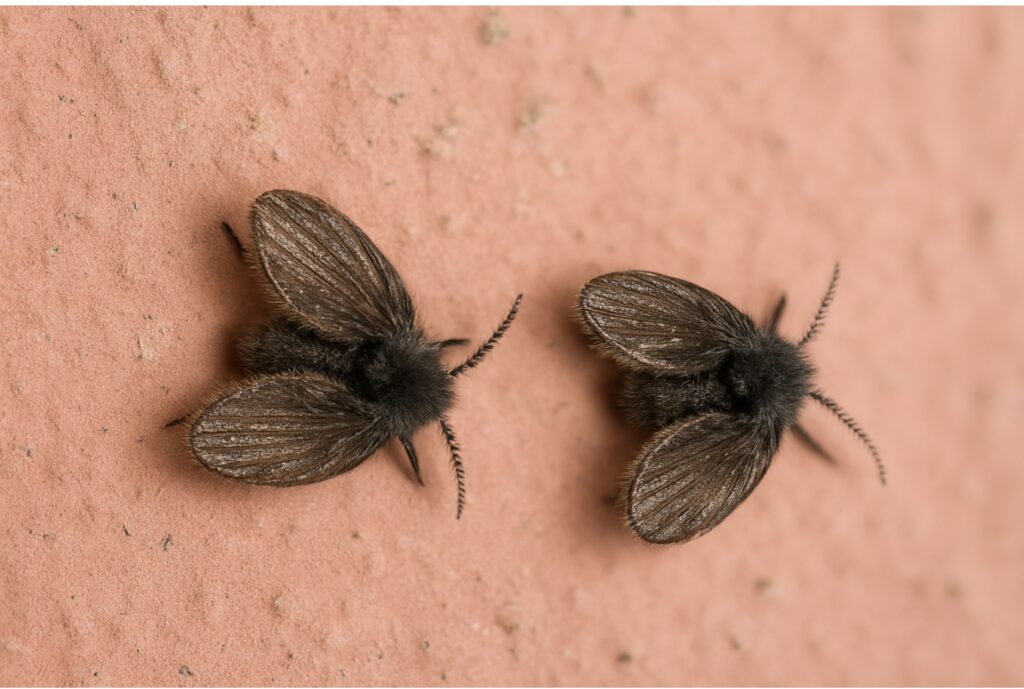
Drain flies, also called moth flies, are small, fuzzy, and tend to cluster near bathroom or kitchen drains. If you notice tiny winged insects hovering near your sink or shower drain, you’re likely dealing with them. Organic buildup inside slow or partially clogged drains is where they breed, which is why surface cleaning rarely solves the problem.
Unlike different kinds of flies, such as house flies or fruit flies, drain flies rarely stray far from their breeding spot. That makes them easier to identify but harder to fully eliminate without clearing out the buildup inside your pipes.
Signs of a Fly Infestation and Health Risks Flies Carry
Seeing a fly or two doesn’t mean you have an infestation. But consistent patterns do. Watch for:
- Flies repeatedly appearing near the same spots, like drains, trash bins, or food prep areas
- Small dark specks on walls, counters, or light fixtures (fly droppings)
- Maggots near garbage, pet food, or moist organic waste
- Increased fly activity near windows during the evening
Beyond the annoyance, all kinds of flies carry genuine health risks. House flies pick up bacteria from waste and decaying matter, then deposit them on food and surfaces. Fruit flies carry bacteria as well and contaminate food even when their numbers seem manageable. Drain flies don’t transmit disease directly, but their presence signals unsanitary drain conditions that need attention.
South Carolina’s climate gives flies a longer active season than most states. A small infestation can grow significantly within days if the breeding source stays intact.
How to Get Rid of Flies
Cutting off what attracts and sustains them is the most effective approach. Start here:
- Seal garbage bins and take out trash before it sits overnight
- Clean kitchen and bathroom drains weekly to prevent organic buildup
- Refrigerate or seal ripe fruit rather than leaving it on the counter
- Fix moisture problems. Leaky pipes, standing water, and poor ventilation all attract flies
- Install tight-fitting window and door screens to block entry points
- Remove pet waste promptly from both indoor and outdoor areas
For drain flies, a bio-enzyme drain cleaner or boiling water poured directly into the drain breaks down the organic matter in which they breed.
These steps reduce fly activity, but if a breeding source is hidden inside your walls or plumbing, DIY methods won’t reach it. Understanding fly behavior and what drives each species indoors goes a long way in knowing when you’ve done all you can on your own and when it’s time to bring in backup.
When to Call a Pest Control Professional
Some infestations clear up with consistent cleaning and prevention. Others don’t. Call a professional when:
- Fly activity continues or gets worse after a week of prevention efforts
- You can’t locate or access the breeding source
- Maggots keep appearing despite removing visible waste
- You’re dealing with multiple fly species at once
Knowing how many types of flies are active in your home at the same time often points to a larger sanitation or structural issue that needs a trained eye. Action Pest Services identifies fly species common to South Carolina homes, locates breeding sources, and builds a treatment plan that addresses the root cause and not just the flies you can see.If flies have taken over, don’t wait them out. Contact Action Pest Services today and get ahead of it before the problem grows.